Coming up
Full calendarThe next solar eclipses, with the band where the central phase can be seen. Everywhere else nearby sees a partial eclipse.
6 February 2027
7m 45slongest ring of fire
Chile, Argentina, Uruguay, Brazil, Ghana
Read the story2 August 2027
6m 27slongest totality
Morocco, Spain, Algeria, Tunisia, Libya and 5 more
Times and places26 January 2028
10m 20slongest ring of fire
Ecuador, Peru, Brazil, Colombia, Suriname and 3 more
Read the story22 July 2028
5m 15slongest totality
Australia, New Zealand
Read the story14 January 2029
82%of the Sun covered at most
Partial only. Deepest near Canada.
Read the story12 June 2029
34%of the Sun covered at most
Partial only. Deepest over the ocean or polar regions.
Read the story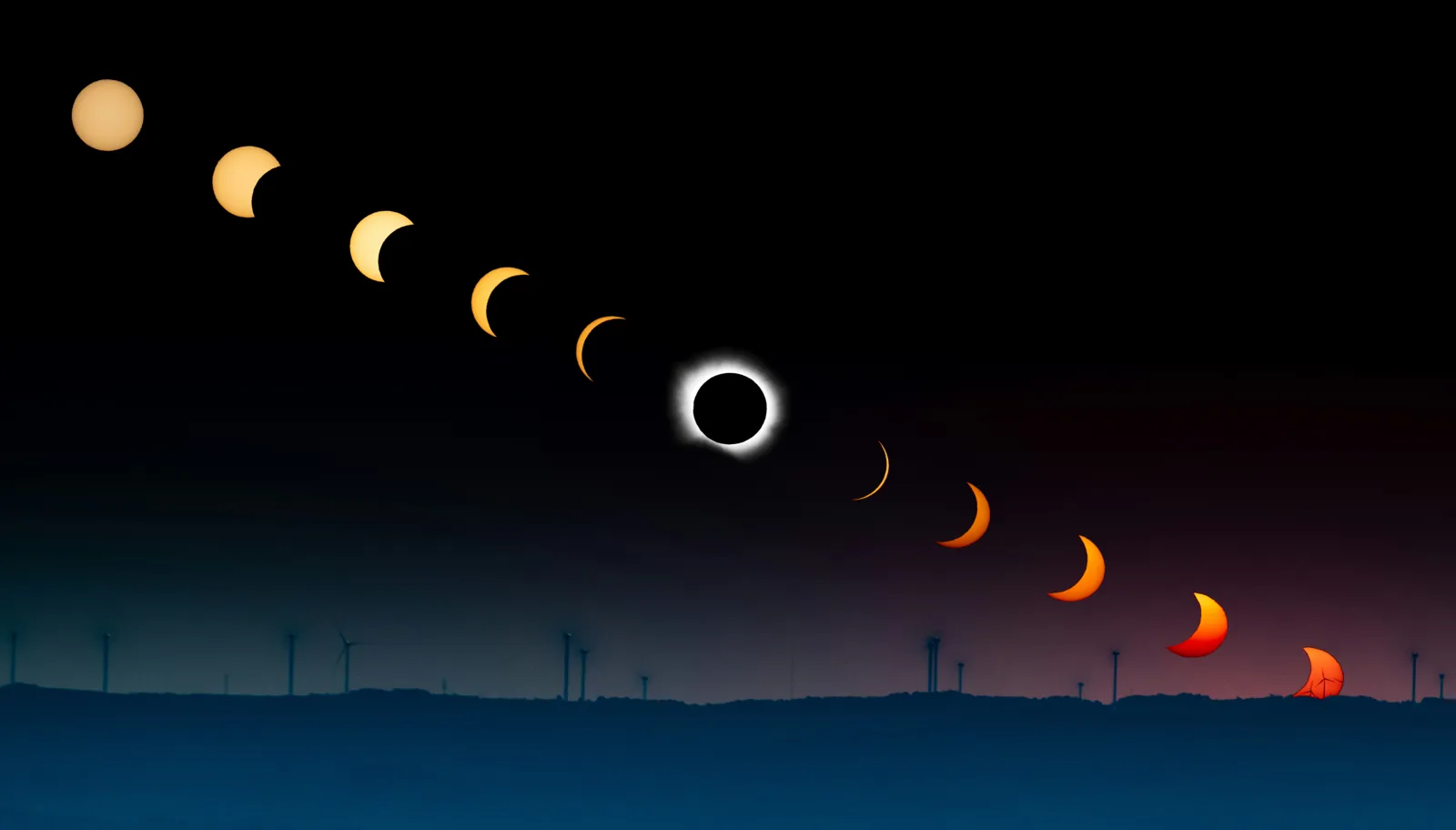
From the first bite to the last crescent
A total eclipse unfolds over two to three hours, and the darkness itself lasts only a few minutes of it.
How an eclipse worksThe total eclipse of 2 August 2027
All 2027 guidesThe dark band is where the Sun will be completely covered. The numbers show how long totality lasts in each place.
Every town on the path, with local times
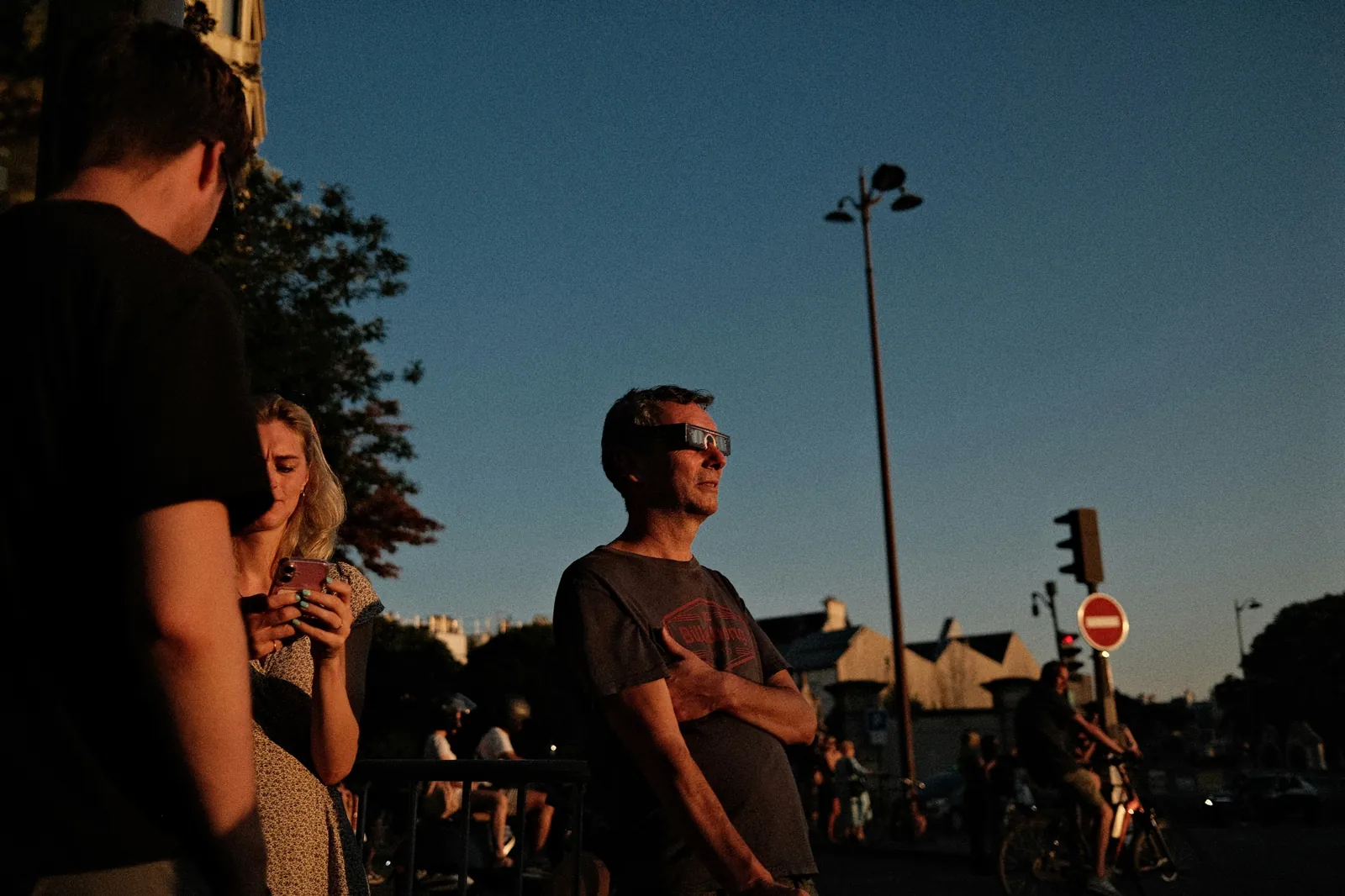
Glasses on for every partial phase
The naked eye is safe only while the Sun is completely covered. Before and after, you need certified eclipse glasses or a pinhole.
How to watch safelyLearn
All guidesLearn
How a solar eclipse works
Why the Moon can hide the Sun, why it does not happen every month, and how the shadow races across the Earth.
Learn
Total, annular, partial and hybrid eclipses
The four kinds of solar eclipse, what each one looks like and how often they come round.
Learn
What happens during totality, minute by minute
From the first bite out of the Sun to the diamond ring and the corona, using real timings for Luxor in 2027.
Learn
Solar eclipse facts that surprise most people
Records, coincidences and history, each checked against our own calculations or a named source.
Learn
Why the Moon turns red during a lunar eclipse
How sunlight bent through Earth’s atmosphere colours the eclipsed Moon, and why some blood moons are almost black.
History
All historyHistory
Every total solar eclipse of the last 100 years
All 73 total eclipses from 1926 to 2026, decade by decade: wartime expeditions, Concorde, Cold War rivalries and the crowds of 2017 and 2024.
History
Who first recorded a solar eclipse?
From a clay tablet in Ugarit to Assyrian chronicles and Chinese oracle bones, the oldest eclipse records and how they are dated.
History
Eclipses that changed science
Prominences in 1860, helium in 1868, the hot corona and Einstein in 1919: what darkness at noon taught astronomers.
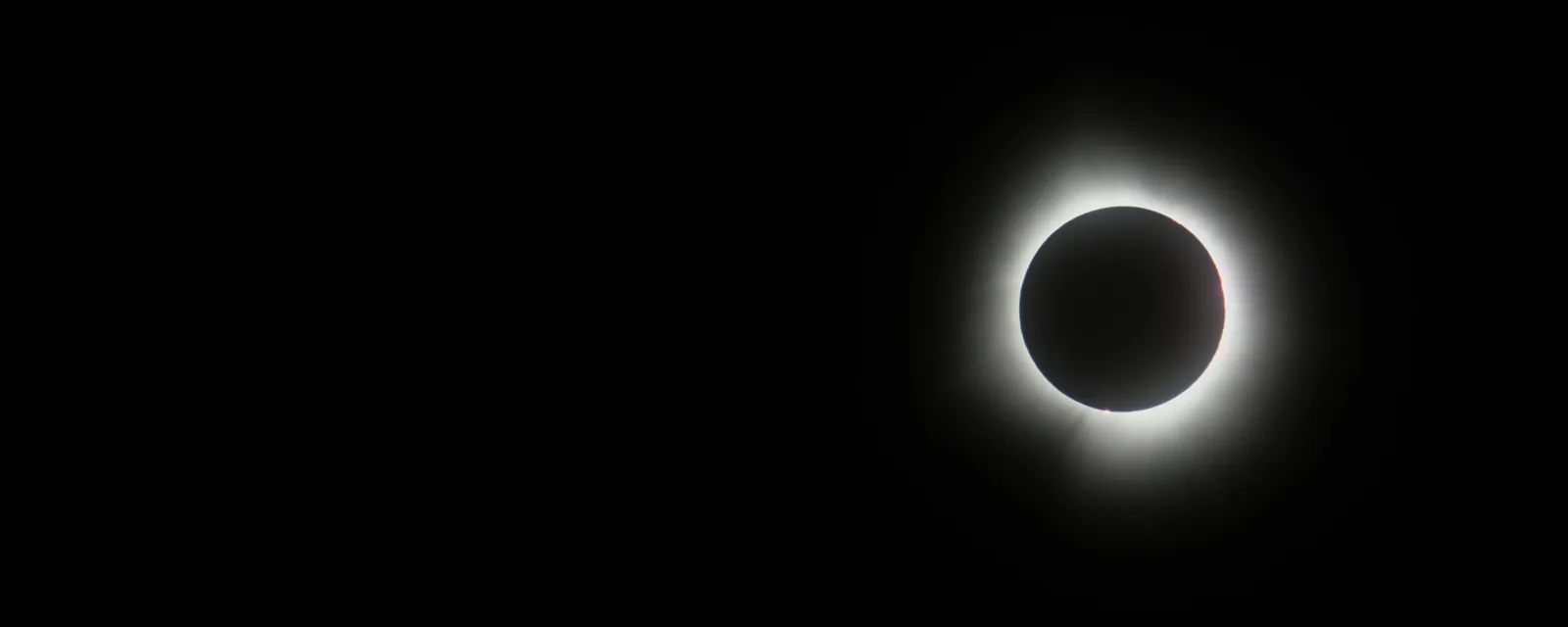
The corona shows itself only in totality
Even with 99% of the Sun covered it stays hidden. Inside the path, the pearly outer atmosphere of the Sun fills the sky for a few minutes.
What happens during totalityNews
All news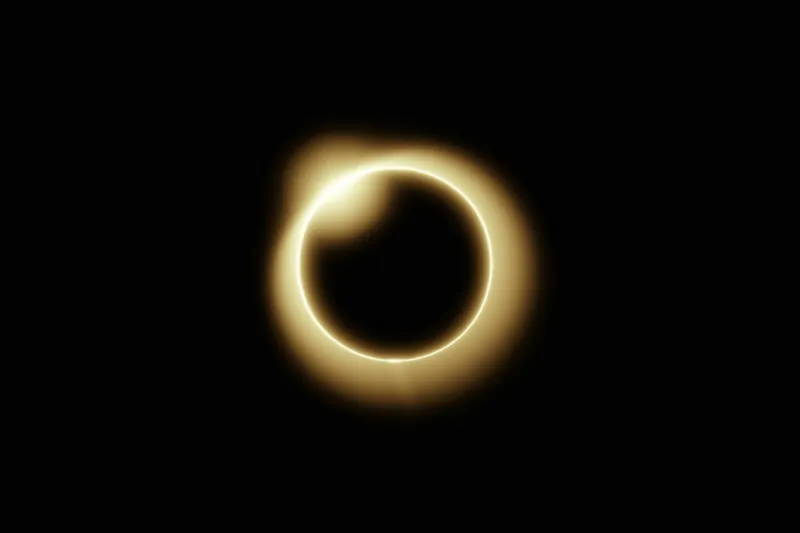
News
The first eclipse of 2027 is a ring of fire over Argentina, Uruguay and Ghana
On 6 February 2027 the Moon leaves a bright ring of sunlight around its edge for up to seven and a half minutes along the Atlantic coast of Argentina.

News
The 2027 eclipse will darken Star Wars filming locations in Tunisia
Both the Mos Espa set near Tozeur and the Mos Eisley streets of Ajim on Djerba lie inside the path of totality.

News
Luxor named one of National Geographic’s best places to visit in 2027
The eclipse city makes the Best of the World 2027 list, with new hotels and a luxury sleeper train due to open next year.
News
Egypt sets up a special committee to prepare for the 2027 eclipse
The committee will choose viewing sites, provide services there and coordinate security, transport and help for visitors.
News
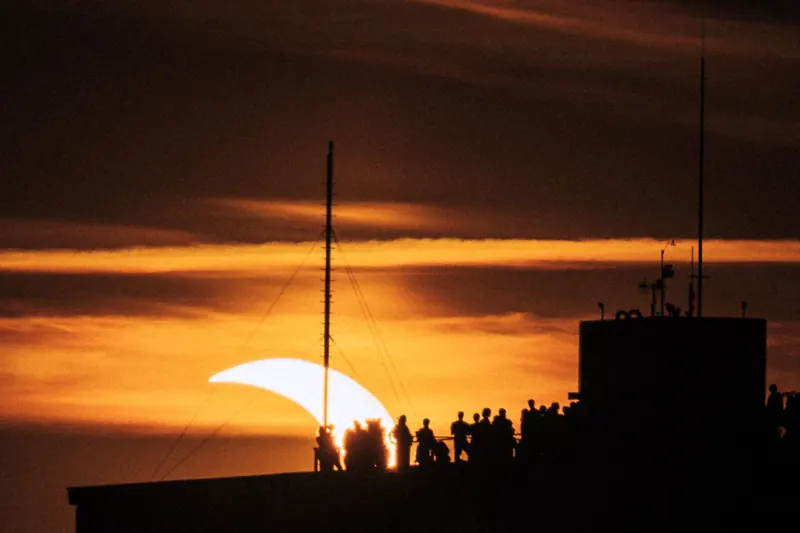
Millions watched Spain’s first total eclipse in over a century
Clear skies, heat above 35°C (95°F) and 350 official viewing sites: how the eclipse of 12 August 2026 went, a year before the next one.